< Back

Test System for Lithium Ion Energy Storage Systems


Safe and Reliable Testing for Lithium-Ion Energy Storage Systems  


As e-mobility and other large-scale applications increasingly rely on powerful lithium-ion batteries, rigorous testing is critical to guarantee their safety, reliability, and performance. Due to the high energy densities and potential risks of failure—such as destruction from overcharging or malfunctions during temperature tests—laboratory and personnel safety must remain the highest priority. 


Simultech, in partnership with Weiss Technik, delivers sophisticated environmental simulation and battery abuse test systems that fully comply with stringent safety standards, including adherence to EUCAR Hazard Standards and ATEX directives for hazard assessment. 


Custom-Engineered Battery Testing Solutions 


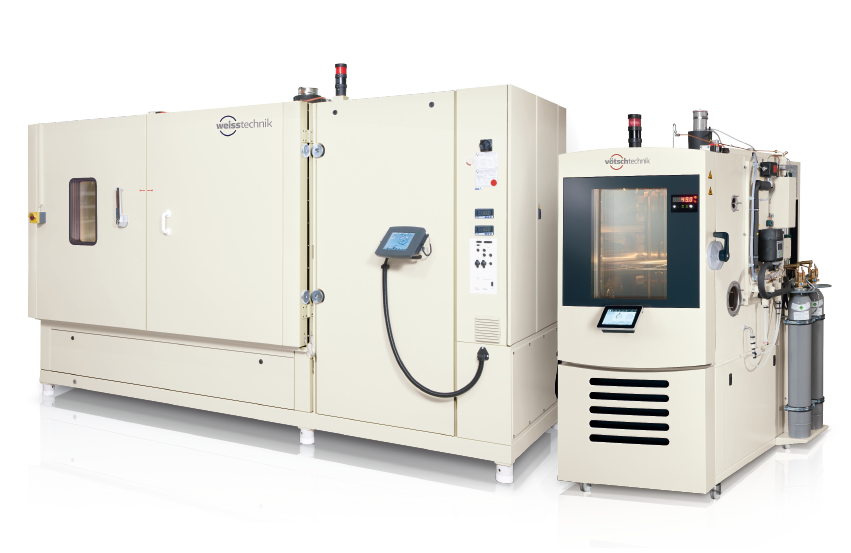
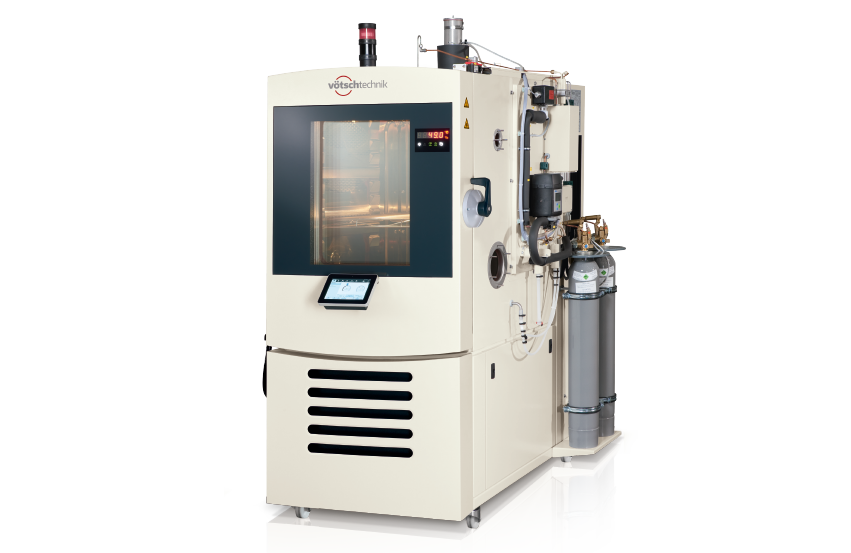
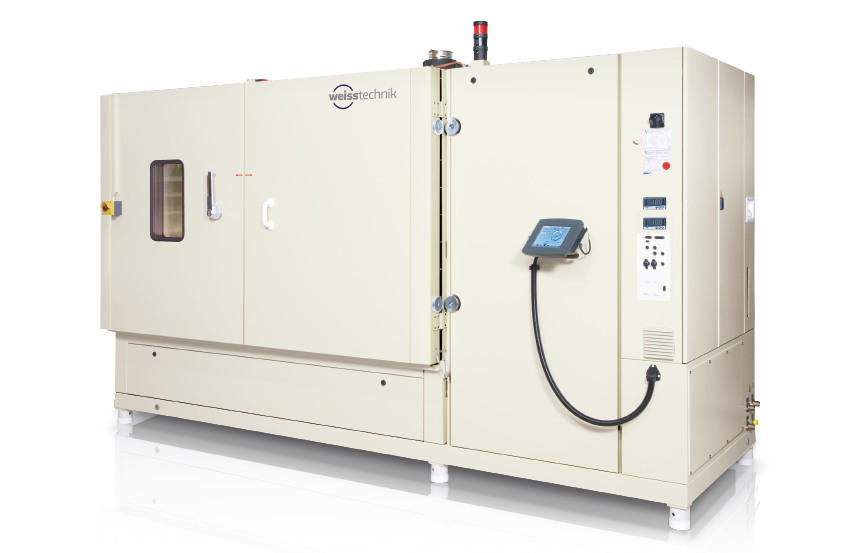
We provide a comprehensive range of testing solutions, from standard compact chambers to large, customized walk-in/drive-in test rooms. Our expertise allows for testing of various components and assemblies: 


Individual Cells 

Modules 

Battery Packs 

Complete Drive Units (with or without a Battery Management System (BMS)) 


The design of each system is determined by a thorough hazard analysis, taking into account the test specimen's dimensions, energy density, and whether it's a prototype or series production unit, as well as the client’s specific safety philosophy. 


Why Choose Simultech for Li-Ion Battery Testing? 


• Access to Proven Technology: Benefit from the reliable and safe Weiss Technik test systems, which are tailored for the stringent requirements of Li-Ion cells, modules, and packs. 


• Safety and Compliance Expertise: We ensure optimal test safety by coordinating chamber design with the EUCAR Hazard Levels (0-7) and integrating safety equipment based on thorough hazard assessments. 


• Comprehensive Local Support: As your partner in Australia and New Zealand, we provide commissioning, installation, training, and a strong commitment to after-sales service and maintenance. 


• Scalable and Custom Solutions: We offer flexible testing solutions ranging from standard compact test chambers to custom-designed walk-in and drive-in test rooms for large battery packs and complete drive units. 


• All-in-One Environmental Testing: Our chambers can simulate the full range of necessary conditions, including thermal, climatic, mechanical (vibration), and environmental exposure (dust, corrosion). 


Contact Simultech today to enhance your electrical energy storage testing capabilities with advanced, EUCAR Hazard Level-compliant test systems for accurate, reliable, and safe results. 


ASK A QUICK QUESTIONâ–»
temperature and humidity test chamber, Battery Testing

Key Testing Capabilities and Standards 


Our advanced test chambers are capable of simulating a multitude of environmental and mechanical stresses that energy storage devices may face throughout their lifespan. 


Test Type 

Description 

Thermal & Climatic 

Temperature, climate, temperature shock, and damp heat tests. 

Mechanical 

Vibration tests and multi-axial shaker table (MAST) tests for combined load testing. 

Environmental Exposure 

Dust, corrosion, splash water, and immersion tests. 

Safety and Abuse 

Tests assessing hazard potential from overcharging, deep discharge, external short-circuit, and external heating. 


Essential Safety Features by Hazard Level 


To ensure the utmost safety for personnel and facilities, our test systems incorporate a range of safety equipment tailored to the potential hazard level as defined by the EUCAR Hazard Standards. 


Safety Features and Their Functions 

• Electrical & Mechanical Locks (Levels 0–7) 

These locks secure the test space door during both automatic and manual tests. They hold the door closed firmly, providing an additional layer of safety alongside the pressure release flap. 

• Reversible Pressure Release Flap (Levels 4–7) 

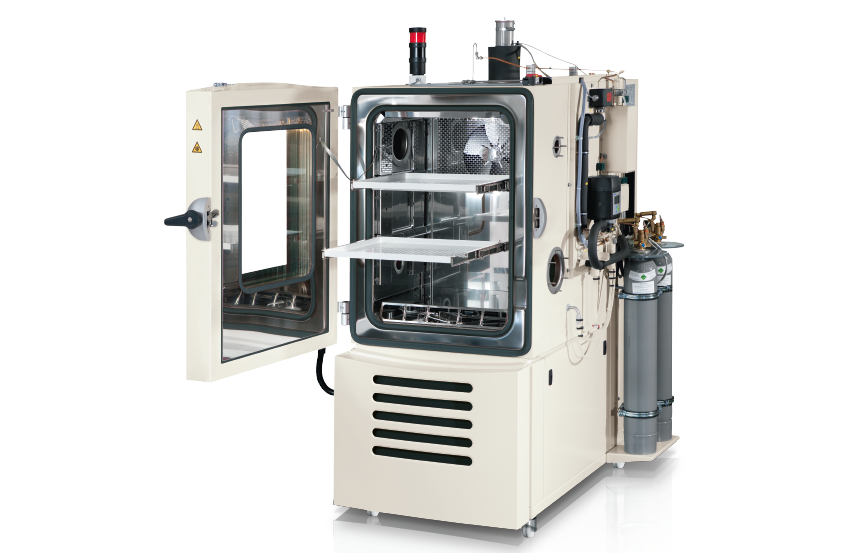
A mechanically weighted flap mounted on the cabinet top, designed to vent gas and relieve internal pressure buildup within the chamber. 

• Fire Detection (Levels 4–7) 

Independent temperature sensors (Pt 100) or carbon monoxide (CO) gas sensors monitor for fire conditions. Optional detection for hydrocarbons (CH) and hydrogen (H2) enhances safety monitoring. 

• Flushing and Inertisation (Levels 4–7) 

A flushing system provides rapid air replacement or floods the chamber with nitrogen (N2) or carbon dioxide (CO2) to inertise the test space in case of fire. 

• Pressure Reduction (Level 7) 

Incorporates a certified burst disc in the overpressure-resistant test space design, enabling rapid release of large gas volumes generated during battery damage. 

• Sealing Plug and Retaining Clamp (Levels 4–7) 

These components secure entry port plugs, maintaining test integrity and preventing the escape of gases or contaminants. 


Ask a Quick Question